







Corydalis Yanhusuo, also known as Chinese poppy, is a frequently used ingredient in traditional Chinese medicine. Why have people been interested in this plant for centuries, and what benefits does it offer?
Corydalis Yanhusuo and its botanical characteristics
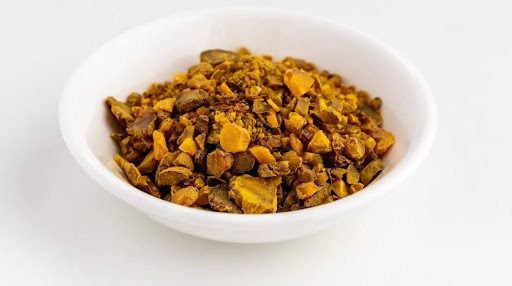
Corydalis Yanhusuo is a perennial plant native to China, belonging to the poppy family. In nature, it grows to a height of 30 to 60 cm and has grayish-green leaves with pink to purple flowers that grow in clusters. However, the most important part of the Chinese poppy is its underground tubers. These are the main source of medicinal substances.
Corydalis Yanhusuo grows in the mountainous provinces of China, such as Sichuan. The tubers of the Chinese poppy contain several alkaloids, such as corydalis, dehydrocorydalis, and tetrahydropalmatine. All these alkaloids affect the human nervous system and act as effective analgesics. It is therefore no surprise that the first area of medicine in which Corydalis Yanhusuo found application was pain relief.
Other pharmacological effects
The analgesic effect of Chinese poppy has already been mentioned. It is even reported that Chinese poppy extracts can be as effective as morphine in pain relief. Unlike morphine, however, they do not create a risk of addiction. Corydalis Yanhusuo is therefore often used to relieve chronic pain caused by arthritis, migraines, back pain, menstrual pain, etc.
Extracts from the Corydalis Yanhusuo plant can also be used as a gentle sedative and help with insomnia or anxiety. The alkaloids contained in Chinese poppy also have anti-inflammatory effects. Traditional Chinese medicine uses virtually all of these properties and adds to them the support of blood circulation and the restoration of the body’s overall vitality. However, modern Western medicine and pharmacology are also slowly discovering the Corydalis Yanhusuo plant. Scientific studies confirm its very good analgesic properties and its effects in the treatment of depression and anxiety.
Modern medicine is even investigating its potential in the field of neuroprotection, with some studies suggesting that it could play a role in the treatment of neurodegenerative diseases such as Parkinson’s and Alzheimer’s. Only the future will tell to what extent this path can lead.
Corydalis Yanhusuo and possible side effects
Unlike many other plants that we have inherited from ancient cultures, Corydalis Yanhusuo has the advantage of not posing any major risks. Nevertheless, it is important to ensure that extracts are used in accordance with the recommended dosage and to avoid violating certain basic rules. The main thing is that we should not combine this plant with any medications that also affect our nervous system. These are typically sedatives or antidepressants. Excessive consumption can then manifest itself in the form of dizziness, nausea, or excessive drowsiness.
Extracts from the Corydalis Yanhusuo plant should definitely not be consumed by pregnant women. There are two reasons for this. First, it can trigger menstruation and contractions, which in the worst case can lead to miscarriage. In addition, Corydalis Yanhusuo extracts contain certain alkaloids that are able to pass through the placenta and thus directly threaten the healthy development of the fetus.
Corydalis yanhusuo could also be dangerous during breastfeeding. It contains a chemical called berberine. Berberine can be transferred to infants through breast milk and can cause serious damage to the nervous system in newborns, including brain damage.
Another contraindication is a blood clotting disorder, which Corydalis yanhusuo can exacerbate. Extracts should therefore not be used after surgery.
Another problem is high bilirubin levels. Bilirubin is a chemical substance produced when old red blood cells break down. Under normal circumstances, it is removed by the liver. However, Corydalis yanhusuo also contains the aforementioned berberine, which can prevent the liver from removing bilirubin quickly enough. This can cause problems in people with high bilirubin levels.
Legal status of Corydalis Yanhusuo in different countries
In most countries around the world, Corydalis Yanhusuo is legal and freely available. Let’s start with its country of origin. In China and other Asian countries, the plant is widely available and often sold. It is most commonly sold as part of herbal mixtures, as an extract, or in the form of dried tubers.
In the European Union, it is also easy to buy Corydalis Yanhusuo in herbal product stores or online. The only restriction is that it cannot yet be promoted as a dietary supplement or even a medicine. This approach also applies to the Czech Republic. You can buy it in many places in Czechia. However, do not forget to consult your doctor. It is always worth it. The herb is also legal and commonly available in the United States and Canada. The authorities in these countries have not yet decided to classify it as a medicinal substance or a full-fledged dietary supplement.
However, there are also countries where Corydalis Yanhusuo is regulated or directly banned. This is the case, for example, in Australia, where Chinese poppy is only available on prescription, and a stricter regime also exists in some Arab countries and in Singapore.
Czech relatives of Chinese poppy
In the Czech Republic, the closest relatives of Chinese Corydalis Yanhusuo are the so-called dymnivky. The most common types are dymnivka dutá (Corydalis cava) and dymnivka plná (Corydalis fulva). They can be found in parks, deciduous groves, and private gardens. They were also used in folk medicine in the past. If you would like to grow some Corydalis, make sure you provide it with slightly acidic soil with a high humus content.
Growing Corydalis Yanhusuo
If you would like to grow this unique plant at home, you will need to provide it with soil that has even and, above all, constant moisture. It does not like dry or waterlogged soil. It is therefore ideal to water the plant once a week to maintain optimal moisture levels.
Corydalis Yanhusuo is impressively resistant to temperature fluctuations and can survive both sub-zero temperatures and heat up to around 38 degrees. However, this does not mean that it thrives in these conditions. During periods of extreme heat, it is therefore necessary to ensure sufficient water and, ideally, shade. In extreme frosts, mulching is recommended to help prevent root damage.
When growing, it is important to remove dead flowers and dead or damaged stems. This pruning is important to ensure optimal flowering and prevent the spread of disease. If you want to grow Chinese poppy from seeds, use fresh seeds and place them in well-drained soil with a light covering. In this case, too, it is necessary to maintain constant moisture without overwatering.
How to prepare Corydalis Yanhusuo for consumption
Corydalis Yanhusuo can be consumed in several ways. First, you can prepare a decoction. The dried tubers should be crushed or cut into small pieces and then boiled in water at a ratio of about 5 to 10 grams per 500 ml of water.
The second method is to prepare a tincture. This is done by steeping the crushed dried tubers in alcohol in a ratio of 1:5 for two to four weeks. Ten to twenty drops of this tincture can then be added to water or tea. Corydalis Yanhusuo can also be consumed in the form of ground dried tubers, which can be added to smoothies, for example. Of course, commercial products containing Corydalis Yanhusuo in capsule form are also available.
Corydalis Yanhusuo, or Chinese poppy, is an interesting plant that has been used in traditional Chinese medicine for hundreds of years to treat a variety of ailments. These include insomnia and chronic pain. Corydalis Yanhusuo is completely legal and freely available in most countries. This also applies to the Czech Republic. Nevertheless, it is advisable to follow certain rules when consuming it and to take into account any contraindications.
Conclusion
Corydalis Yanhusuo is a herb widely used in traditional Chinese medicine, primarily for its analgesic and sedative effects. Currently, it is also increasingly used in the West as a natural pain reliever that works similarly to classic analgesics. It helps with menstrual pain, muscle and joint pain, migraines, and neuropathic pain.
In addition, it has mild sedative effects and promotes sleep, making it suitable for insomnia and stress. It also promotes blood circulation, which can be beneficial for ischemic diseases or problems with cold extremities. In traditional Chinese medicine, it is often combined with other herbs and used to treat blood stasis, pain syndromes, and inflammation.
Although it has a number of beneficial effects, it should be used with caution, as excessive consumption can cause side effects such as drowsiness or a drop in blood pressure. It is also not advisable to combine it with certain medications, such as anticoagulants. It is always best to consult a doctor.