

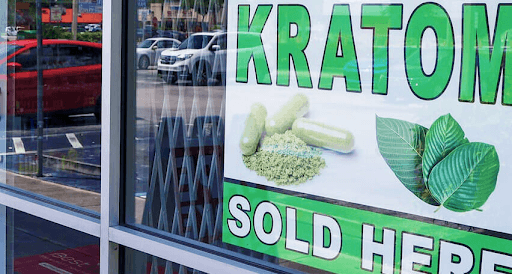
Kratom has been a very popular substance in recent decades. It is produced from trees that originally grow in Asia, but is consumed in many countries around the world. However, its consumption is not legal everywhere. In fact, it is often not allowed to be sold as a food product, yet people still buy it regularly. In this article, we will discuss the legality of kratom in different countries and what changes are planned in the near future.
Europe
The legal regulations on kratom vary considerably in different European countries, ranging from complete tolerance to a total ban. Regulations change over time. If you want to travel and take kratom with you, always check the current rules in the countries you are visiting.
The European Union as a whole
The European Union itself, in its directives and decisions, deals primarily with cooperation between Member States and their cooperation in controlling new psychoactive substances. Every year, new synthetic substances appear that are not covered by previous regulations, or substances of natural origin that are not new, such as kratom, but have been consumed only locally for a relatively long time, especially in the countries where they are produced.
Action Plan on Drugs 2000–2004
In an effort to respond more quickly to changing conditions in the market for psychoactive substances in Europe, the European Union (hereinafter also referred to as the EU) adopted the Action Plan on Drugs 2000–2004. The main objective was to ensure a common approach among Member States. Given the free movement of persons, it is very difficult to synchronise measures if different rules apply in each Member State. This applies to both the regulation of sales and the criminal law consequences of possession, production or sale of such substances. An early warning system was thus created, which was the responsibility of the European Monitoring Centre for Drugs and Drug Addiction (hereinafter referred to as the EMCDDA).
Council Decision of 20054
- In May 2005, Council Decision No 2005/ 387/JVV on the exchange of information, risk assessment and control of new psychoactive substances as a response to the European Union’s efforts to strengthen the exchange of information on abused or misused psychoactive substances and to ensure appropriate cooperation with the European Medicines Agency (hereinafter referred to as the EMEA).
The EDMC Scientific Committee plays a central role in assessing the risks associated with new psychoactive substances. On the basis of this decision, the Scientific Committee was expanded to include experts from the European Commission, Europol and the EMEA, as well as other experts from scientific fields that are not sufficiently represented in the EDMC Scientific Committee. The decision introduced a mechanism for the rapid exchange of information on new psychoactive substances and applications for their registration, and also established an assessment of the risks associated with these new psychoactive substances so that the measures for the control of narcotic and psychotropic substances applied in Member States could also be applied to new psychoactive substances. This applied to all substances that had not yet been regulated as drugs.
The decision stipulated that when a new psychoactive substance was subject to control measures within the European Union, Member States would endeavour to adopt the necessary measures in accordance with their national law within one year of such a measure. However, the common approach did not prevent a Member State from maintaining or introducing any national control measures it deemed appropriate on its territory once a new psychoactive substance had been identified by a Member State.
2017 Directive
The above-mentioned decision was repealed by Directive 2017/2103 of the European Parliament and of the Council of 15 November 2017. This simplified the rules also addressed by other EU legislative rules by introducing an annex to the directive that could be more easily updated and to which substances not yet regulated as drugs by the United Nations (hereinafter the UN) or other international conventions could also be added. The aim was to enable the European Union to respond more quickly to the ever-increasing number of new psychoactive substances appearing on the European market. Whenever a substance was banned, another substance with similar effects but a slightly different composition soon appeared. This made regulation very complicated.
The directive redefined risk assessment to consider whether the social harm caused by a new psychoactive substance to individuals and society is serious and whether it leads to a disruption of public order or violent or antisocial behaviour, generates significant illegal profits or results in significant economic costs to society. The annex to the directive has been regularly updated since then.
European rules and kratom
Mitragyna speciosa (the plant from which kratom originates) and mitragynine, 7-hydroxymitragynine and possibly other alkaloids from this plant are not listed in any of the UN drug conventions. There is also no uniform procedure within the European Union; Member States currently regulate kratom individually in their legislation. Be careful with your sources of information, as they can sometimes differ significantly. Just because a substance is legal in a given country does not always mean that you can consume it in public, for example. Always check directly in the country concerned, or from sources that are no more than a few weeks or months old and are reliable.
Legality of kratom in individual European Union countries
1. Kingdom of Belgium
ILLEGAL
Kratom has been a banned substance in Belgium since 1 June 2024.
2. Republic of Bulgaria
ILLEGAL
Since 2011, kratom has been banned in Bulgaria by a regulation on the classification of plants and substances as narcotic.
3. Czech Republic
LEGAL, but not as a foodstuff.
Legislative changes are currently underway in relation to the regulation of kratom, which should limit its availability, especially to children and young people. We discuss these in more detail below.
4. Kingdom of Denmark
ILLEGAL
Kratom and its main components, mitragynine and 7-hydroxymitragynine, are classified as controlled substances in Denmark. Therefore, their sale, import, possession and use are prohibited (Implementing Regulation No. 174 amending the Euphoriant Substances Act). Under special circumstances, the Danish Medicines Agency may grant authorisation for kratom to individuals, companies, laboratories and institutions. However, this does not apply to ordinary users.
5. Republic of Estonia
ILLEGAL
Kratom itself and one of its main components, 7-hydroxymitragynine, are included in the list of prohibited narcotic and psychotropic substances in Estonia and are therefore illegal.
6. Republic of Finland
CONTROLLED SUBSTANCE
Kratom is classified as a psychoactive substance under the Decree on Prohibited Psychoactive Substances on the Consumer Market (No. 1130/2014). In accordance with Article 44 of the Criminal Code, it is therefore prohibited to import, store or sell kratom in Finland. However, the possession and use of kratom is not a criminal offence.
7. French Republic
ILLEGAL
Kratom and its main components, mitragynine and 7-hydroxymitragynine, are included in the list of psychotropic substances. They are therefore illegal in France.
8. Republic of Croatia
ILLEGAL
Kratom itself and its main component, mitragynine, are included in the list of narcotic substances, psychotropic substances and plants used for the production of drugs (Decree No. 293/2011 – Regulation on the classification of plants and substances as narcotic substances). However, personal use of drugs is not a criminal offence in Croatia, but is considered a misdemeanour for which a maximum financial penalty may be imposed.
9. Republic of Ireland
ILLEGAL
The main components of kratom (mitragynine and 7-hydroxymitragynine) are prohibited in Ireland under Statutory Instrument No. 173/2017 on drug abuse.
10. Italian Republic
ILLEGAL
Kratom itself and its main component, mitragynine, are currently listed as narcotic and psychotropic substances in Italy and are therefore illegal.
11. Republic of Cyprus
ILLEGAL
Kratom has been illegal in Cyprus since April 2021.
12. Republic of Lithuania
ILLEGAL
Kratom itself and kratom extracts are listed as narcotic and psychotropic substances and are therefore currently banned in Lithuania.
13. Republic of Latvia
ILLEGAL
Kratom and its main components, mitragynine and 7-hydroxymitragynine, are classified as psychoactive substances under Regulation No. 847 on narcotic drugs, psychotropic substances and precursors to be controlled, and are therefore currently banned in Latvia.
14. Grand Duchy of Luxembourg
ILLEGAL
Kratom and its main components, mitragynine and 7-hydroxymitragynine, are classified as psychotropic substances and are currently banned in Luxembourg.
15. Hungary
LEGAL
In Hungary, kratom is not regulated and is not a controlled substance, so it is legal.
16. Republic of Malta
LEGAL
In Malta, kratom is not regulated and is not a controlled substance, so it is legal.
17. Federal Republic of Germany
LEGAL
Kratom is legal in Germany as long as the labels on products containing it state that it is not for human consumption. Kratom is not listed in the German Narcotics Act or as a substance under special control under the Medicines Act.
18. Kingdom of the Netherlands
LEGAL
Kratom is not currently a controlled substance in the Netherlands, so it is legal.
19. Republic of Poland
ILLEGAL
Kratom is included in the list of prohibited narcotic substances in Annex 1 of the Act on Combating Drug Addiction and is therefore illegal in Poland.
20. Portuguese Republic
CONTROLLED SUBSTANCE
Kratom and its main components, mitragynine and 7-hydroxymitragynine, are listed as prohibited psychoactive substances under Regulation No. 154/2013, and their sale or import is therefore illegal in Portugal. However, possession of kratom is not a criminal offence.
21. Republic of Austria
LEGAL
Kratom is not regulated and is not currently a controlled substance in Austria, so it is legal.
22. Republic of Romania
ILLEGAL
Kratom is banned in Romania by Emergency Ordinance No. 6 of February 2010, which amended Law No. 143/2000.
23. Greece
LEGAL
Kratom is not regulated, is not currently a controlled substance in Greece, and is therefore legal.
24. Slovak Republic
ILLEGAL
Kratom as such is classified as a prohibited psychotropic substance under Act No. 139/1998 on narcotic and psychotropic substances and preparations and is therefore currently illegal in Slovakia.
25. Republic of Slovenia:
ILLEGAL
Kratom is classified as a psychoactive substance under the Regulation on the Classification of Prohibited Drugs and is therefore illegal in Slovenia.
- Kingdom of Spain
LEGAL
Kratom is not regulated, is not currently a controlled substance in Spain, and is therefore legal.
27. Kingdom of Sweden
CONTROLLED SUBSTANCE
The main ingredient in kratom (mitragynine) is listed in Regulation No. 1992:155 and is classified as a psychoactive substance. It is therefore illegal in Sweden to manufacture or prepare the product for human consumption. Consumption itself is also prohibited. However, kratom may be imported and sold as a raw material for soap production.
Non-EU member states
- Republic of Albania
LEGAL
Kratom is not regulated in Albania; it is not currently a controlled substance and is therefore legal.
- Principality of Andorra
NO INFORMATION
No information is currently available on whether kratom is legal in Andorra.
- Belarus
ILLEGAL
Kratom as such is included in the National List of Prohibited Narcotic and Psychotropic Substances and Their Precursors Subject to State Control in the Republic of Belarus, Decree No. 26 of May 28, 2003).
- Bosnia and Herzegovina
LEGAL
Kratom is not regulated in Bosnia and Herzegovina; it is currently not a controlled substance there and is therefore legal.
- Montenegro
LEGAL
Kratom is not currently a controlled substance in Montenegro and is therefore legal there.
- Republic of Iceland
ILLEGAL
Kratom itself is a controlled substance under Amendment No. 93/1994. In accordance with local legislation, kratom cannot be imported into Iceland, nor can it be sold, possessed, or used there.
- Republic of Kosovo
LEGAL
Kratom is not regulated in Kosovo; it is currently not a controlled substance there and is therefore legal.
- Principality of Liechtenstein
NO INFORMATION
No information is currently available on whether kratom is legal in Liechtenstein.
- Republic of Moldova
ILLEGAL
Kratom itself is included in List II of narcotic and psychotropic substances not used for medical purposes and is therefore prohibited in Moldova.
- Principality of Monaco
NO INFORMATION
There is currently no information available on whether kratom is legal in Monaco. However, given the close alignment of Monaco’s regulations with those of France, it can be assumed that it is illegal, as it is in France.
- Kingdom of Norway
ILLEGAL
Kratom itself is a controlled substance under the Drug Classification Regulation. The import, export, sale, purchase, distribution, possession, manufacture, or processing of kratom is a criminal offense in Norway. However, doctors may prescribe kratom as a medicine in special cases.
- Russian Federation
ILLEGAL
The main components of kratom (mitragynine and 7-hydroxymitragynine) have been illegal in Russia since 2011, based on Decree No. 822/2011.
- Republic of San Marino
NO INFORMATION
There is currently no information available on whether kratom is legal in San Marino.
- Republic of Serbia
ILLEGAL
Kratom itself has been on the list of prohibited drugs in Serbia since 2022 and is therefore illegal.
- Republic of North Macedonia
LEGAL
Kratom is not regulated in North Macedonia; it is currently not a controlled substance there and is therefore legal.
- Swiss Confederation
ILLEGAL
Kratom has been banned since 2017 because it is listed in the annex to the Narcotics Act and is therefore illegal in Switzerland.
- Republic of Turkey
ILLEGAL
Kratom and its components are included in the list of psychoactive substances listed in Decree 2013/5742 and is therefore illegal in Turkey since 2014.
- Ukraine
ILLEGAL
Kratom is currently not legal in Ukraine.
- United Kingdom of Great Britain and Northern Ireland
ILLEGAL
In 2016, the Psychoactive Substances Act came into force, banning kratom in the UK.
Changes to the law currently being discussed in the Czech Republic
In May of this year, MPs approved an amendment to the Act on Addictive Substances (Act No. 167/1998 Coll.) as amended and other related laws. These were legislative rules for the handling of substances such as kratom or cannabis with a low content of the active ingredient THC. This was already the second amendment after the legal regulation banning the sale of products containing HHC, THCP, and HHC-O was approved in March. However, new substances immediately appeared that were not restricted by the March ban.
The aim of the May parliamentary amendment was to protect children in particular from selected substances with psychomodulatory and psychoactive effects. During the approval process, a dispute arose among MPs as to whether the proposed ban on the export of the substances in question or their cross-border sale was in line with the rules of the common EU market, or whether the new legislation would be considered an interference with the common market. MPs therefore sent it to the European Commission for comment, which somewhat delayed its discussion in the Senate.
New conditions for sellers
Under the approved amendment, psychoactive substances will be classified according to their risk level. Various conditions will be introduced for sellers, such as the requirement to obtain a license to handle psychomodulatory substances and precisely defined mandatory information on packaging. There will also be a ban on public advertising.
The approved law assumes that, in addition to the list of prohibited narcotic substances, there will be two other lists. One of them will list psychoactive substances whose health effects are not yet known. All new substances would be listed there. In order to be sold, they would have to be added to another list, but before that could happen, the new substance would be studied for two years. The second list would include psychomodulatory substances with low health risks. The Czech government would decide which list a particular substance would be included on, based on a proposal from the Ministry of Health in cooperation with experts from the National Institute of Public Health and the government’s anti-drug department.
Fees for sales permits
In order to distribute psychomodulatory substances, sellers must now have a permit issued by the Ministry of Health. There will also be a fee of CZK 200,000 for initiating the procedure for issuing a license to handle these substances. The fee will be the same for every e-shop. If a seller has more than one store, they will pay a fee of CZK 20,000 for each license.
Greater protection for children
However, a fundamental change is that products containing psychomodulatory substances will now only be available for purchase by adults, and only in specialized stores. Children and young people under the age of 18 will be prohibited from entering these stores. It will no longer be possible to purchase such substances from vending machines. This legal amendment responds to cases where children have purchased psychoactive substances in the form of candy and overdosed.
Therefore, products containing psychoactive substances will no longer be allowed to imitate candy or toys in order to avoid attracting children. Internet sales will also be tightened, with age verification required for the sale and delivery of goods. This is also a response to the current practice, where, for example, the media had children purchase products containing psychoactive substances via the internet and the courier who delivered the goods did not verify their age in any way. Children could thus commonly purchase these substances without their parents‘ knowledge.
Approval of the law
On October 9, 2024, the Senate approved the law without amendments, as recommended by its health and constitutional law committees, in the wording submitted to the Senate by the Chamber of Deputies. The law then only awaited the signature of President Petr Pavel, who did so on October 17, and publication in the collection of laws. This law will take effect on the first day of the second calendar month following its promulgation. Given the date on which the president signed the law and the usual time for publication in the collection, it can be assumed that the law will take effect on December 1, 2024. However, there are transitional measures for some legal obligations. The decisive factor, however, is the publication of the final text of the law in the collection of laws.
Kratom outside Europe
Kratom is also treated differently in other countries around the world. Below is an overview of the available information on selected countries by continent.
Asia
Mitragyna speciosa occurs naturally in some South Asian countries. These include Thailand, Cambodia, Malaysia, Indonesia, and the Philippines, but it is also cultivated as an agricultural commodity in other countries, such as Vietnam and Myanmar. Therefore, kratom is legal in many of these countries, as it has been for a long time in the past, but this is far from true for all of Asia today. During the 20th century, when the psychoactive properties of kratom were better understood, some countries began to ban its cultivation and use.
- Armenia
ILLEGAL
- Brunei
ILLEGAL
- China
PROBABLY ILLEGAL
It is not clear from available sources whether kratom is legal or not, but given China’s generally strict anti-drug policy, it can be assumed that it is not legal.
- Philippines
ILLEGAL
- Georgia
ILLEGAL
- Hong Kong
ILLEGAL
Kratom was banned in Hong Kong in 2021. Even all shipments that are only passing through the country are confiscated.
- India
- LEGAL
- Kratom and its main active ingredients are not included in the list of officially banned substances or narcotics of the Indian government’s Narcotics Control Bureau. Nevertheless, caution is advised if you are entering the country with large quantities of kratom.
- Indonesia
Currently LEGAL thanks to transitional provisions, legislation approved to make it ILLEGAL
The cultivation of kratom for export is currently legal, but its local use or distribution is not. Although this country is considered one of the largest suppliers of kratom, the Indonesian Minister of Health banned its cultivation and export in 2019, stating that a transitional period of five years would apply. The future is uncertain for now, with both local and foreign pressure to lift the ban.
- Israel
ILLEGAL
Israeli law prohibits the main psychoactive alkaloids in kratom, mitragynine and 7-hydroxymitragynine, which means that kratom containing these substances is also illegal.
- Japan
ILLEGAL
Kratom is currently listed as a controlled substance in Japan. Its sale, import, and possession are therefore illegal and punishable by law. However, local experts are discussing its potential therapeutic effects. Changes cannot be ruled out, either to relax or tighten the law.
- South Korea
ILLEGAL
In South Korea, the import, export, and use of kratom are prohibited. The import and possession of kratom are severely punished.
- Cambodia
ILLEGAL
- Laos
ILLEGAL
- Malaysia
ILLEGAL
Malaysia banned the use of kratom in 1952. According to available information, illegal use of kratom is punishable by up to four years in prison or a fine of approximately $3,150. However, in practice, mere possession in Malaysia is not a major problem. Nevertheless, importing kratom into the country is problematic and, above a certain amount, punishable by law.
- Myanmar
ILLEGAL
Sale and cultivation are not legal. The Myanmar government arrests its citizens for possession of kratom and routinely destroys confiscated kratom products.
- Singapore
ILLEGAL
Mitragynine and 7-hydroxymitragynine are currently considered Class A controlled drugs and are listed in the Misuse of Drugs Act. Possession and consumption of drugs are punishable by up to 10 years in prison and/or a fine of $20,000. Depending on the quantity, penalties for drug trafficking range from caning to the death penalty.
- United Arab Emirates
ILLEGAL
Since 2015, kratom has been classified as an illegal substance by the local Ministry of Health.
- Thailand
ILLEGAL/LEGAL for medical purposes only
Thailand was the first country in Southeast Asia to ban the cultivation of the trees from which kratom is produced. Since 1979, kratom has been classified as a narcotic, albeit one with the least stringent classification. The production, import, and export of kratom is punishable by either imprisonment for up to two years or a fine of up to $6,500. Simply possessing kratom meant imprisonment for up to one year or a fine of up to $650 for Thais. Since 2018, the cultivation, import, export, and use of kratom for medicinal purposes has been permitted in Thailand.
- Taiwan
- ILLEGAL
- Since 2017, kratom and one of its active ingredients, mitragynine, have been on the list of controlled substances. The import of kratom into Taiwan is therefore considered illegal and can be punished by a fine and, in some cases, imprisonment.
- Vietnam
UNCONFIRMED INFORMATION
According to available sources, kratom is not illegal in Vietnam, but the country is also a member of the Association of Southeast Asian Nations (ASEAN), which has banned the addition of kratom to medicines and dietary supplements since 2013.
America
- Argentina
ILLEGAL
Mitragynine is an illegal substance in Argentina according to a 2017 decree.
- Bahamas
LEGAL
Kratom is not listed on any controlled substance list.
- Belize
There are online stores selling kratom, but it is not listed on the controlled substance list.
- Bolivia
LEGAL
Kratom is not on the list of controlled substances.
- Brazil
LEGAL
Kratom is not classified as a prohibited substance in the country, but it is classified as a new psychotropic substance.
- Chile
LEGAL
Kratom is sold online in Chile and is not listed among psychotropic substances or drugs.
- Dominican Republic
LEGAL
Kratom is not listed as a controlled substance.
- Guyana
LEGAL
Kratom is not listed as a controlled substance.
- Honduras
- LEGAL
Kratom is not listed as a controlled substance.
- Canada
Rather ILLEGAL
According to legislation passed in 2019, kratom is legal in Canada, but the Canadian Ministry of Health does not allow the sale of kratom and products containing kratom. Kratom and products made from it may not be sold or labeled as products intended for human consumption in Canada. In the past, Canadian stores have also been raided and kratom products confiscated.
- Colombia
LEGAL
In Colombia, kratom is sold in online stores and is not listed as a controlled substance.
- Cuba
LEGAL
Cuba has strict laws regarding drugs and controlled substances, so caution is advised.
- Mexico
Probably LEGAL
According to available information, kratom is currently legal in Mexico and can be bought, sold, distributed, possessed, and used throughout Mexico.
- Nicaragua
- LEGAL
Kratom is not listed as a controlled substance.
- Panama
- LEGAL
- Kratom and its components are not listed on any controlled substance list.
- Paraguay
LEGAL
Kratom is not listed as a controlled substance.
- Peru
LEGAL
Kratom is not listed as a controlled substance.
- Puerto Rico
- LEGAL
- Kratom is not listed as a controlled substance.
- El Salvador
- LEGAL
Kratom is not listed as a controlled substance.
- United States
ILLEGAL in some areas
Kratom is legal (purchase, sale, distribution, and use) in most of the United States, but it is illegal in some states and even in some counties. The situation is changing very dynamically. In June 2024, the following status applied:
- a) Alabama
ILLEGAL
- b) Arkansas
ILLEGAL
- c) Colorado
ILLEGAL in Denver if sold for human consumption
- d) Florida
ILLEGAL in Sarasota
- e) Illinois
ILLEGAL in Jerseyville, LEGAL in the rest of the state only for persons over 18 years of age
- f) Indiana
ILLEGAL
- g) California
ILLEGAL in San Diego
- h) Mississippi
LEGAL in the state, but ILLEGAL in some counties and cities within the state
- i) New York
LEGAL only for persons over 18 years of age
- j) Rhode Island
ILLEGAL
- k) Vermont
ILLEGAL
- l) Wisconsin
ILLEGAL
- Uruguay
LEGAL
Because Uruguay follows international lists of controlled substances and drugs, kratom is legal.
Australia and Oceania
- Australian Commonwealth
ILLEGAL
Kratom is classified as a narcotic substance. Probably due to strict regulations on the import of plant-based products into the country, there are no known cases of kratom abuse in this country.
- New Zealand
ILLEGAL without a prescription
Mitragyna speciosa as a plant is not directly prohibited here. The ban on cultivation, purchase, and sale applies to the free market, but if kratom is prescribed by a doctor, there are no restrictions on it.
Africa
In Africa, access to kratom varies considerably. Some countries have no regulations and allow its use and sale without restrictions, while others have bans or strict regulations. We were unable to find more detailed information for most countries. Traveling to Africa with kratom may therefore not be safe.
- Egypt
Probably ILLEGAL
Although kratom and its main active ingredients are not explicitly listed on any list of prohibited or controlled substances in Egypt, experts on local conditions strongly recommend not taking kratom with you when traveling to Egypt.
- South Africa
- LEGAL
Kratom is therefore not illegal in South Africa and is not regulated in any way. As in many other countries, kratom may not be sold as a dietary supplement for human consumption or as a substance with medicinal properties.