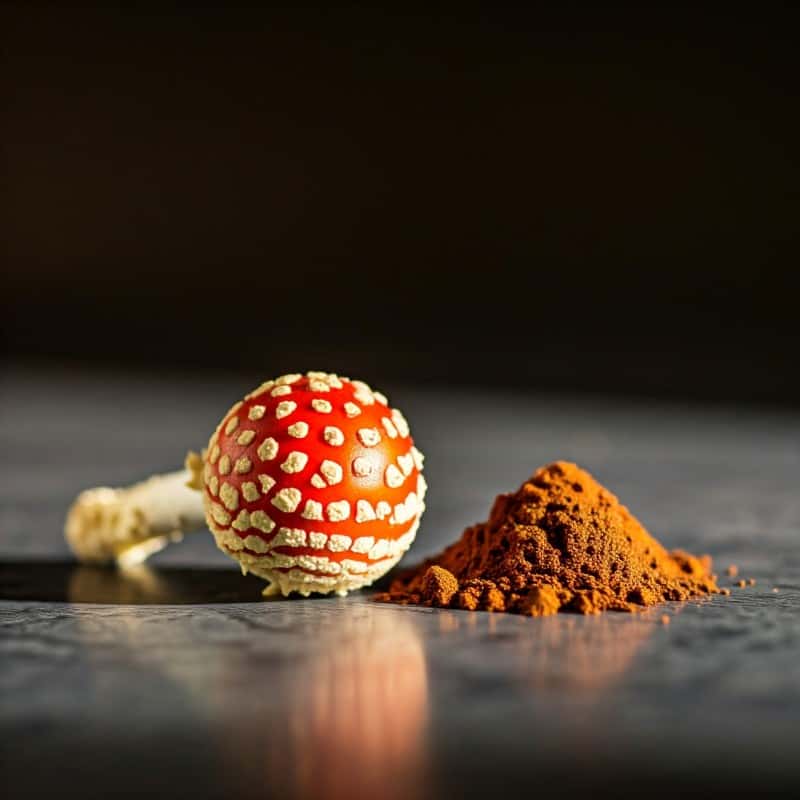
The red fly agaric is one of the most recognisable mushrooms growing in eastern european forests. Its bright red cap with white spots is a symbol of fairy tales, folk art and winter holidays. However, behind its external beauty lies a complex history of use in traditional medicine, shamanism and modern microdosing practices.
Where it grows and what makes it unique
Amanita muscaria is a member of the Amanitaceae family. It prefers deep and semi-deep forests with a mixture of coniferous and deciduous trees, especially birch, pine and spruce. The mushroom forms mycorrhiza — a symbiosis with tree roots, exchanging nutrients. It bears fruit mainly in autumn, but in favourable years it can appear earlier.
Despite the common definition of ‘poisonous mushroom’, its toxicity is overestimated: cases of fatal poisoning are extremely rare. It all depends on the dose and method of preparation.
Active substances and their effects
The fly agaric contains two key biologically active substances:
Muscimol is a psychoactive component that activates GABAA receptors. It causes calmness, relaxation and changes in perception. Moderate doses can help with stress, insomnia, and muscle spasms.
Ibotenoic acid is the primary form, which is less active and toxic. During drying, it partially converts to muscimol. When consuming raw mushrooms or exceeding the dose, nausea, dizziness, hallucinations, and convulsions are possible. Fatalities are rare but possible when consumed in large quantities or in combination with other substances.
Historical use
- In Siberia, shamans used fly agaric in ceremonies to induce altered states of consciousness.
- In the Vedic tradition of India and Persia, the mushroom is associated with the drink ‘soma’.
- In the 19th century, images of the fly agaric became popular on Christmas greeting cards in Europe as a symbol of prosperity and good luck.
- In works of art (e.g., Alice in Wonderland), the mushroom alludes to altered perception and psyche.
Contemporary perspective: therapeutic potential
Today, muscimol is being actively studied as a component for combating anxiety, restlessness, insomnia, and neurological problems.
Previous research data indicate the possible analgesic and anti-inflammatory effects of muscimol-based preparations. Microdosing enthusiasts use fly agaric in small doses as a tool to maintain emotional balance, concentration, and mental resource recovery. However, clinical trials are still in their early stages.
Legal aspects in Europe
It is important to note that in Europe Amanita muscaria is not included in the list of controlled or prohibited substances.
According to the country's laws, the possession, sale, and cultivation of this mushroom are not prohibited by law. This means:
- You can legally collect, store, sell, and grow red fly agaric as decorative, scientific, or collectible material.
Restrictions only apply to its use for food or medical purposes — in this case, it may be subject to other regulations.