What the plant is and where the leaf comes from
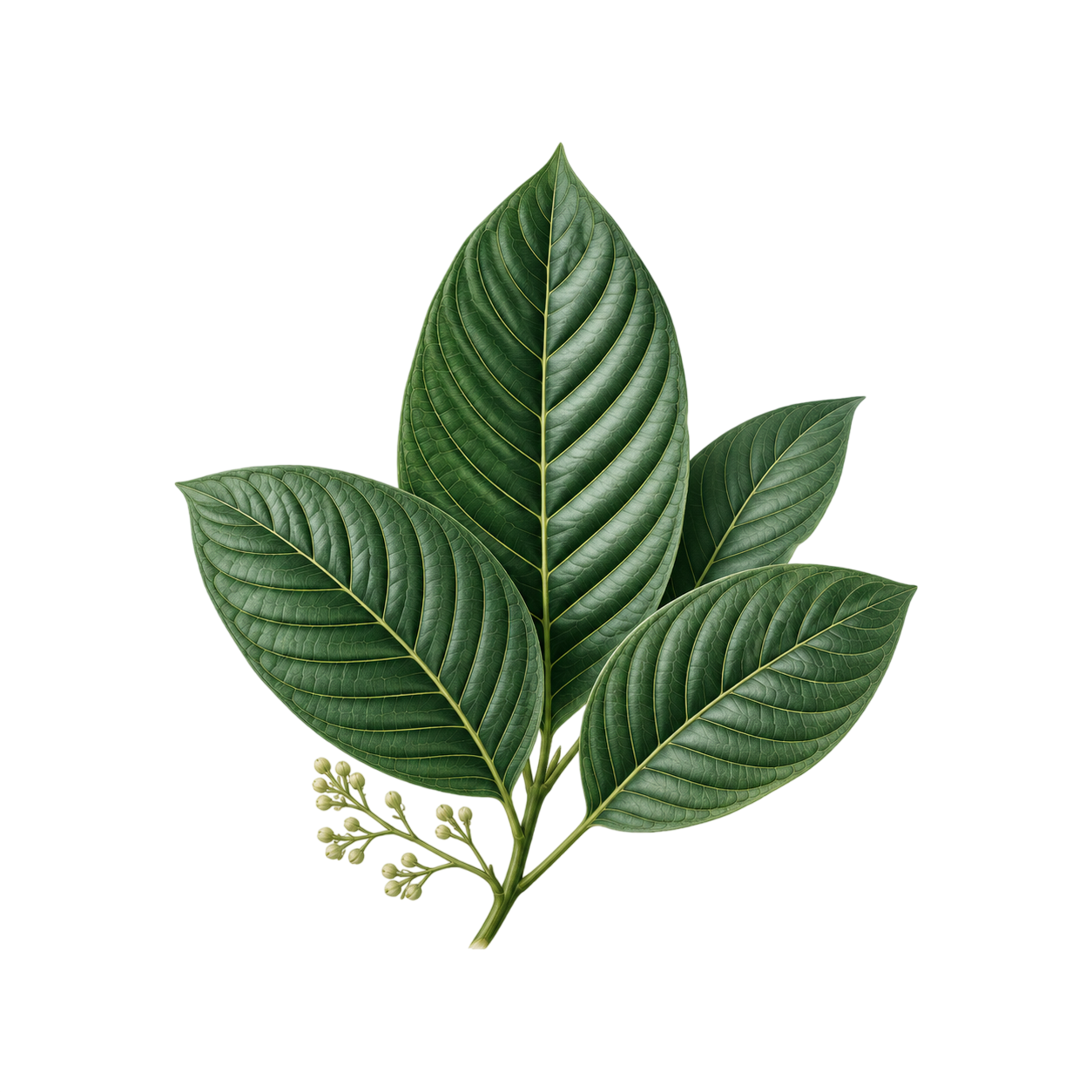
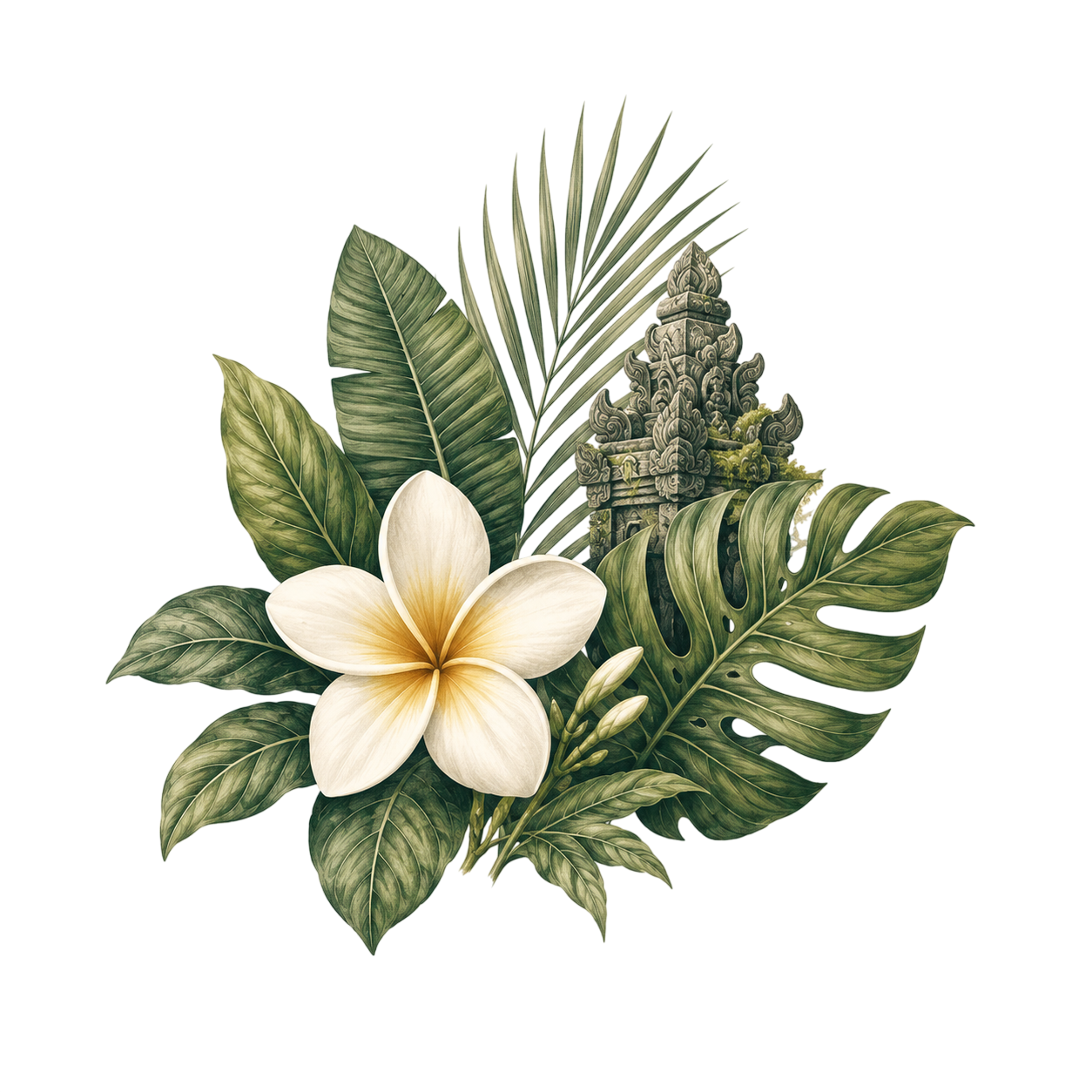
Mitragyna speciosa is an evergreen tropical tree of the coffee family (Rubiaceae), a botanical relative of coffee; in the wild it grows up to 25 m in the humid equatorial forests and river lowlands of Southeast Asia (where kratom grows). The warm climate lets the leaf be harvested from the same trees year-round. The leaf behind Rurut comes from West Kalimantan on Borneo, the main producing area of today's Indonesia (Indonesia as a kratom supplier).
What nano milling changes - and what it does not
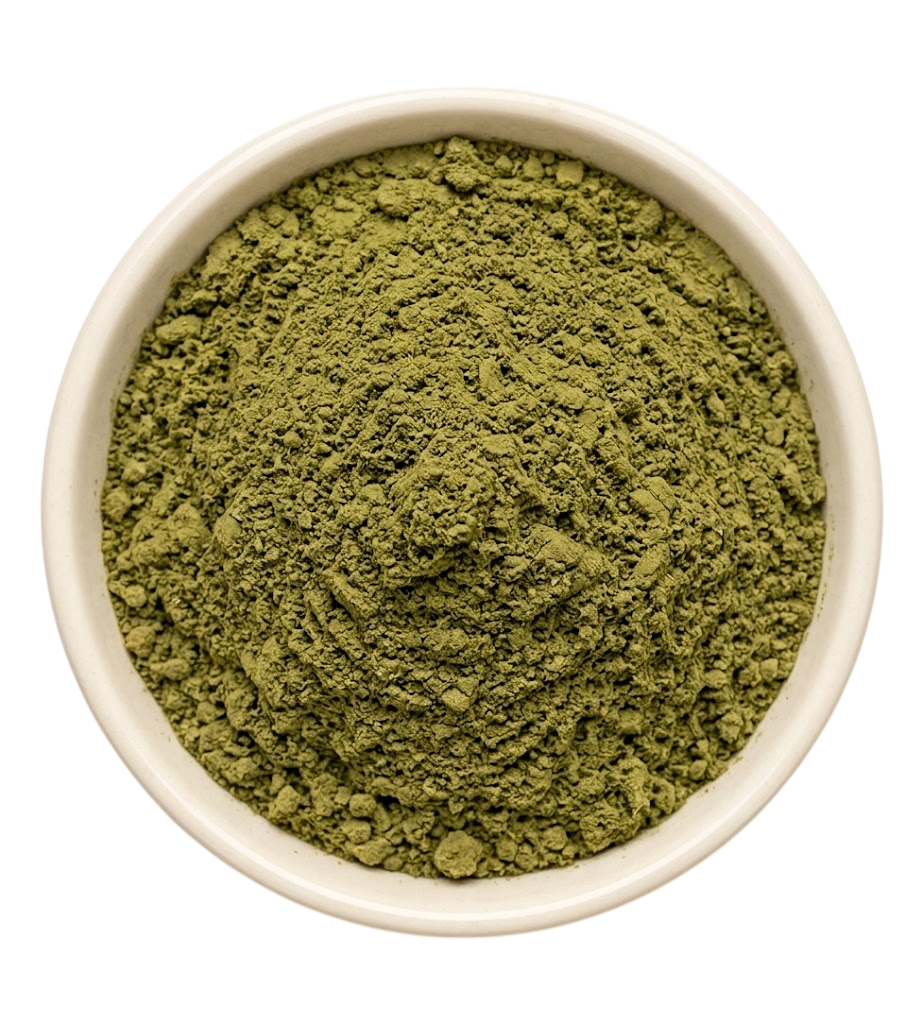
We mill regular powders to a fraction of around 80 mesh, i.e. particles up to roughly 180 micrometres (kratom powder granulometry). Rurut goes one step further: after the coarse milling comes a second, finer one that brings the particles below 50 micrometres. In practice that means a finer, lighter-looking powder that wets faster, mixes more easily and, at the same weight, fills a different volume on the spoon. What nano milling does not change is alkaloid content - the mill adds and removes nothing; the values are set by the leaf and you read them in the batch protocol. That a finer grind means a stronger effect is something the law does not let us claim, and our COAs do not bear it out; the nano form in general is covered on the nano kratom page.
Alkaloids and the laboratory analysis
The kratom leaf holds more than forty alkaloids; the main one is mitragynine, alongside smaller amounts of 7-hydroxymitragynine, speciogynine and paynantheine. The strain is represented by a single product - Green Rurut Nano - so the lab-test table has one row: mitragynine and 7-hydroxymitragynine by HPLC, plus purity, microbiology and heavy metals from the accredited VŠCHT Prague laboratory. The batch number is always on the packaging; how to read a protocol is explained in the guide Kratom COAs, and an overview of all batches is on the Laboratory tests page.
Green processing in brief
The leaf for this strain goes through the same green processing as our other green powders: harvest at medium maturity, removal of stems and central veins, and standard indoor drying without fermentation (leaf fermentation). Green therefore describes a process, not a strain, and on its own says nothing about strength (kratom vein colours). How the green items in our range differ from one another is compared on the green kratom page.
Dosing, packs and buying
The instructions are the same as for any of our powders and do not change with grind size: 3 g per serving, no more than 10 g per day, a 3-day break between uses, and always weigh the dose on scales with a 0.1 g step (dosing by the instructions). Green Rurut Nano comes in 25 g and 50 g resealable pouches with the mandatory labelling required by the psychomodulatory substances act. Sold only to persons over 18 after age verification - at our two Prague stores or in the e-shop with delivery across the Czech Republic (delivery and payment).
Strains from the same island and the green colour
Other strains: Maeng Da, Sumatra, Thai, Hulu, Elephant, Borneo.
Warning: This product is not a food. Not intended for persons under 18. Use according to the instructions. Do not exceed the recommended daily dose.