







Kratom is a plant-based substance that has recently been classified as a psychomodulatory substance under Czech law. What are the consequences for its users, and how will this affect the purchase of this product?
Why kratom is classified as a psychomodulatory substance
In early September 2025, the government took one of the most significant steps for kratom users. It classified this plant as a psychomodulatory substance. It was the first substance ever to be classified in this way. This means, above all, special regulatory rules for its sale.
These can be summarized as follows:
- The product can be purchased from the age of 18.
- Kratom may only be sold in specialized stores.
- Businesses dealing in these substances must have a license.
- Permits for sale are issued by the Ministry of Health.
- This product range may be sold online, but e-shops may only be operated by brick-and-mortar stores.
- Sale in vending machines is also prohibited.
- Kratom cannot be placed next to food and cannot be sold in schools, restaurants, or supermarkets.
- The product must not visually resemble toys, food, or candy so as not to give the impression that it is suitable for children and young people.
- There must be no advertising for this product, even online.
- The goods are subject to inspection, and according to the new regulations, the State Agricultural and Food Inspection Authority (SZPI) is responsible for supervising the handling of PML.
- Each batch must undergo purity tests, and the label must contain the exact composition, information about the origin, risks, warnings, and the like.
- Customers should receive information about recommended doses from sellers.
- A one-time license fee must be paid, as well as annual maintenance fees, which depend on whether the entity is a manufacturer, retailer, wholesaler, or retail outlet.
- Sellers are required to keep records of sales, track & trace, inventory, batches, tests, and clear labeling.
- E-shops will be prohibited from cross-border sales.
The main goal was to get kratom out of the so-called gray zone. Until now, as a product not covered by legislation, it has been sold domestically primarily as a collector’s item, not intended for consumption at all. Kratom is known for its stimulating, relaxing, invigorating, and even euphoric effects.

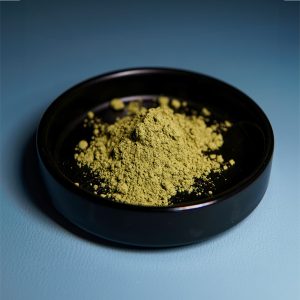
White Elephant Kratom powder
🐘 Premium kratom
🌿 White variety
⚖️ Balanced effect
Rozpětí cen: 4 € až 126 €
Experts on the new regulatory rules also stated that it is a low-risk substance, both socially and health-wise. The Ministry of Health confirmed this theory in the background information to the regulation, stating literally that kratom and its extract generally do not pose a serious threat to public health and society.
What are psychomodulatory substances?
Psychomodulatory substances are psychoactive substances. They have low health and social risks. This means that they have a known and acceptable safety profile. These substances can be sold as separate products for human consumption.
The introduction of this category was made possible by a change in legislation, specifically Act 321/2024 Coll., which came into force in January 2025. The first draft of the bill appeared at the turn of November and December 2021. In its final form, it established two categories.
The first category consists of so-called classified psychoactive substances.
In this case, it is a quarantine list for unknown substances that are newly appearing on the Czech market. Once classified, these substances may only be used for scientific research. It will therefore not be possible to legally sell or manufacture them.
The second group consists of psychomodulatory substances. These have the ability to affect the psyche, perception, or mood, but do not cause addiction when used responsibly. They are thus practically on the borderline between drugs and common dietary supplements.
According to the formal definition, cannabis and products derived from it most often fall into this category. Low-potency cannabis is characterized by a low THC content of no more than 1%. In practice, this includes CBD, for example.
However, in the Czech Republic, with regard to international regulations, this item has not yet been officially included in the list of psychomodulatory substances. The European Commission has spoken out against its inclusion.
So far, the only substance that has been officially included in the list is kratom. Both of these substances are considered potentially interesting in the field of healthcare. At the same time, however, they face certain challenges related to the quality and safety of their use.
In the case of kratom, the risk is primarily associated with excessive use, i.e., when the user takes too high a dose. This also brings with it significantly stronger effects.
At the same time, some experts are leaning towards recommending its use to consumers who are not 18 years of age, but 21 years of age or older. This is because the brains of young people have different neuroplasticity.
Public debate has thus inevitably forced the establishment of a certain framework that will continue to allow for rational regulation. The government decides on inclusion in the list based on recommendations from an expert group that assesses the risks. This group is to work under the auspices of the Ministry of Health, the National Institute of Public Health, and the Office of the Government.

How the legislation will affect consumers:
The legislation will primarily affect consumers—kratom is currently growing in popularity, especially among young people and students. According to official data from the Customs Administration, approximately 31 tons of kratom were imported into the Czech Republic in 2021. Two years later, however, available estimates indicate more than 190 tons. This represents a sharp rise in popularity.
Under the new legislation, this means that customers will only be able to purchase kratom in selected stores. In this regard, larger cities are primarily recommended, and kratom can now be purchased quite commonly, especially in Prague. As outlined above, you must expect certain restrictions when purchasing online. In e-shops, anyone interested in buying kratom must undergo age verification and also verify their identity upon delivery.
The legality of kratom sales is thus clearly established by these rules. However, further restrictions will also apply to the consumption of psychomodulatory substances. These will be similar to those for alcohol consumption. Driving under the influence of psychomodulatory substances will be a criminal offense, as in the case of alcohol or prohibited substances.
What does the new legislation on the sale of kratom mean for sellers?
Sellers will be required to obtain a license to sell this product range. If they violate the established rules, their license may be revoked. The current vision is for the entire system to function much more strictly than the current practice for alcohol or tobacco.
And how much would entrepreneurs have to pay for this?
The fee policy is set as follows:
d) Initiation of proceedings for the issuance of a license to handle psychomodulatory substances pursuant to Section 33a(1)(b) of the Act on Addictive Substances
CZK 200,000
e) Commencement of proceedings for the issuance of a license to handle psychomodulatory substances pursuant to Section 33a(1)(b) of the Addictive Substances Act concerns the production of psychomodulatory substances at the facility. This applies to every facility where, according to the application, these substances are to be produced.
CZK 200,000
f) Commencement of proceedings for the issuance of a permit for handling pursuant to Section 33a(1)(c) of the Act on Addictive Substances, for each facility where psychomodulatory substances are sold.
CZK 20,000
g) Commencement of proceedings for the issuance of a permit for the handling of psychomodulatory substances pursuant to Section 33a(1)(d) of the Act on Addictive Substances, for each website or application
CZK 200,000
h) Initiation of proceedings for the issuance of a permit for the handling of psychomodulatory substances pursuant to Section 33a(1)(e) of the Act on Addictive Substances
CZK 20,000
i) Initiation of proceedings for the issuance of a permit for the handling of psychomodulatory substances pursuant to Section 33a(1)(f) of the Act on Addictive Substances, for each establishment in which plants or fungi from which psychomodulatory substances can be obtained are cultivated. CZK 200,000
What if this is not complied with?
In the event of a breach of obligations, distributors may be fined up to CZK 2 million or imprisoned. Distributors of kratom will have to prepare for this from next year.
In the event of a breach of obligations, the seller may be fined up to CZK 2 million or face imprisonment. Distributors of kratom will have to prepare for this from next year.
Notification at the EU level took place on October 3, but in practice, the new rules will apply later. Retailers will therefore have enough time to prepare for the changes. Regulated sales will thus begin in full in January 2026.